
From Life-Filled Imagery to Dead Plazas – Why Cities Need a Place-Driven Future
Urban Finland Does anyone else pay attention to this: many times the renderings of new urban development projects include a plaza or similar open space, sitting somewhere in front or … Continue reading
Gendered strategies of Hanoi’s street food vendors
Drawing upon examples of street vendors in Hanoi, this study explores gendered strategies to adapt to rapid urbanization, and how street vendors’ responses, in turn, shape the current informal food … Continue reading
The techno-centric gaze
Much of the existing research on citizen participation technologies takes the technology as its starting point, focusing primarily the identification and analysis of technical barriers to adoption and assessing opportunities … Continue reading
The Production of Space by the Street Vending System
Street vending draws its substance from the space, the street, and the economic exchange lies on the simultaneous presence of two actors: the customer and the vendor. Thus, it seems … Continue reading
Hegel’s Hipsters: Claiming Ownership in the Contemporary City
Property is both revered and reviled. Praised for its connections to autonomy, agency, power and community, property attracts scorching critiques for its implication in exclusion, inequality and injustice. This article … Continue reading
The future of Humanitarian Crises is Urban
Humanitarian crises, manifest through displacement and disasters, are increasingly striking urban settings. And with more than 50 per cent of the world’s population now living in urban areas, there are many … Continue reading
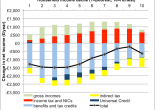
You can’t silence the data when it’s so deafening: The poor have borne the cost of tax and welfare reforms.
Originally posted on RIGHTS in context DERECHOS en contexto:
This article was published in Left Foot Forward. The Equality and Human Rights Commission (EHRC) has published today the distributional results…
The Architecture of ‘Passive Revolution’: Society, State and Space in Modern Mexico
This article analyses the political economy of Henri Lefebvre’s concept of ‘state space’ with specific attention directed towards the Monument to the Revolution in Mexico City, completed in 1938. The … Continue reading

